 |
|
|
|
Mon, 14 Sep, 2026
|

|
|

Pay as you go
No monthly charges. Access for the price of a phone call
Go>
Unmetered
Flat rate dialup access from only £4.99 a month Go>
Broadband
Surf faster from just £13.99 a month Go> |
Save Even More
Combine your phone and internet, and save on your phone calls
More Info> |
This weeks hot offer
 24: Series 5
In association with Amazon.co.uk £26.97 |
|
|
? Caraway
Conservation status: Secure
|
|
| Scientific classification |
| Kingdom: |
Plantae
|
| Division: |
Magnoliophyta
|
| Class: |
Magnoliopsida
|
| Order: |
Apiales
|
| Family: |
Apiaceae
|
| Genus: |
Carum
|
| Species: |
C. carvi
|
|
|
|
|
|
|
|
Carum carvi
L. |
|
|
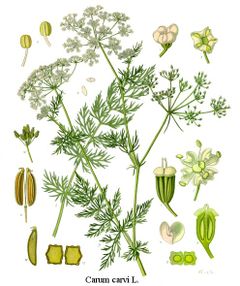
Caraway or Persian cumin (Carum carvi) is a biennial plant in the family Apiaceae, native to Europe and western Asia.The plant is similar in appearance to a carrot plant, with finely divided, feathery leaves with thread-like divisions, growing on 20-30 cm stems. The main flower stem is 40-60 cm tall, with small white or pink flowers in umbels. Caraway seeds are crescent-shaped and around 2 mm long, with five pale ridges. It prefers sun and well-drained soil.
Cultivation and uses
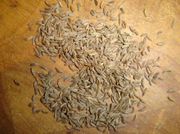 Caraway seeds
The seed, usually used whole, has a pungent, anise-like flavour. The aroma comes from essential oils, mostly carvone and limonene. They are used as a spice in breads especially rye bread.It's also used in liquors, casseroles, and other foods, especially in Central European and Scandinavian cuisine, for instance sauerkraut. It is also used to add flavour to cheeses. Akvavit and several liqueurs are also made with caraway, and a tea made from the seeds is good for colic. Caraway seed oil is also used as a fragrance component in soaps, lotions, and perfumes.The roots may be cooked as a root vegetable like parsnips or carrots. |
Change Text Size:
[A]
[default]
[A] |



 |
|
|
|
|


