|
|
|
|
Mon, 14 Sep, 2026
|

|
|

Pay as you go
No monthly charges. Access for the price of a phone call
Go>
Unmetered
Flat rate dialup access from only £4.99 a month Go>
Broadband
Surf faster from just £13.99 a month Go> |
Save Even More
Combine your phone and internet, and save on your phone calls
More Info> |
This weeks hot offer
 24: Series 5
In association with Amazon.co.uk £26.97 |
|
Contents
 Name Name
History
Name - Contents
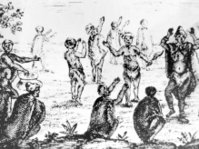
They were traditionally - and are still occasionally in colloquial language - known to white colonists as the Hottentots, a name that is nowadays described as "offensive" by the Oxford Dictionary of South African English. The word "hottentot" meant "stutterer" in the colonists' northern dialect of Dutch, although some Dutch use the verb "stotteren" to describe the clicking sounds (klik being the normal onomatopaea, parallel to English) typically used in the Khoisan languages. The word lives on, however, in the names of several African animal and plant species, such as the Hottentot Fig, or Ice Plant (Carpobrotus edulis).
History - Contents
Khoikhoi social organisation was profoundly damaged and, in the end, destroyed by white colonial expansion and land seizure from the late seventeenth century onwards, which ended traditional Khoikhoi pastoral life. As social structures broke down, some Khoikhoi people settled on farms and became bondsmen or farmworkers; others were incorporated into existing clan and family groups of the Xhosa people.Although there is no longer any 'pure' ethnic group in southern Africa with an exclusively Khoikhoi identity, mixed race groups such as the Coloured people of the Cape area; the Griqua people of the Western Cape and the Oorlams people of Namibia all possess Khoikhoi heritage or ancestry, as do many Xhosa (mainly Bantu) people of the Eastern Cape, and some people who identify as white South Africans. |
Change Text Size:
[A]
[default]
[A] |



 |
|
|
|
|