 |
|
|
|
Wed, 16 Sep, 2026
|

|

|
Sri Lanka is an island in the Indian Ocean about 28 kilometers (18 mi.) off the southeastern coast of India with a population of about 19 million. Density is highest in the southwest where Colombo, the country's main port and industrial center, is located. The net population growth is about 1.3%. Sri Lanka is ethnically, linguistically, and religiously diverse.
 Jump to Page Contents Jump to Page Contents
|
|

Pay as you go
No monthly charges. Access for the price of a phone call
Go>
Unmetered
Flat rate dialup access from only £4.99 a month Go>
Broadband
Surf faster from just £13.99 a month Go> |
Save Even More
Combine your phone and internet, and save on your phone calls
More Info> |
This weeks hot offer
 24: Series 5
In association with Amazon.co.uk £26.97 |
|
Contents
People
Religion
Languages
Related Statistics
People - Contents
Sinhalese make up 74% of the population and are concentrated in the densely populated southwest. Sri Lanka Tamils, citizens whose ancestors have lived on the island for centuries, total about 12% and live predominantly in the north and east.Indian Tamils, a distinct ethnic group, represent about 8% of the population. The British brought them to Sri Lanka in the 19th century as tea and rubber plantation workers, and they remain concentrated in the "tea country" of south-central Sri Lanka. In accordance with a 1964 agreement with India, Sri Lanka granted citizenship to 230,000 "stateless" Indian Tamils in 1988. Under the pact, India granted citizenship to the remainder, some 200,000 of whom now live in India. Another 75,000 Indian Tamils, who themselves or whose parents once applied for Indian citizenship, now wish to remain in Sri Lanka. The government has stated these Tamils will not be forced to return to India, although they are not technically citizens of Sri Lanka.Other minorities include Muslims (both Moors and Malays), at about 7% of the population; Burghers, who are descendants of European colonists, principally from Portugal, the Netherlands and the UK; and aboriginal Veddahs.
Religion - Contents
Most Sinhalese are Buddhist; most Tamils are Hindu. The Malays and Moors are Muslim, the majority of whom practice Sunni Islam. Sizable minorities of both Sinhalese and Tamils are Christians, most of whom are Roman Catholic. The Burgher population is mostly Roman Catholic or Presbyterian. The Veddahs have Animist and Buddhist practices. The 1978 constitution, while assuring freedom of religion, grants primacy to Buddhism.
Languages - Contents
Sinhala, an Indo-European language, is the native tongue of the Sinhalese. Tamils and the Moors speak Tamil, a Dravidian language. The Malays speak Sri Lankan Creole Malay. Many of the Burghers speak Sri Lankan Indo-Portuguese although its use has declined and all speak Tamil. The Veddahs speak a language closely related to Sinhala. Use of English has declined since independence, but it continues to be spoken by many in the middle and upper middle classes, particularly in Colombo. The government is seeking to reverse the decline in the use of English, mainly for economic but also for political reasons. Both Sinhala and Tamil are official languages.
Related Statistics - Contents
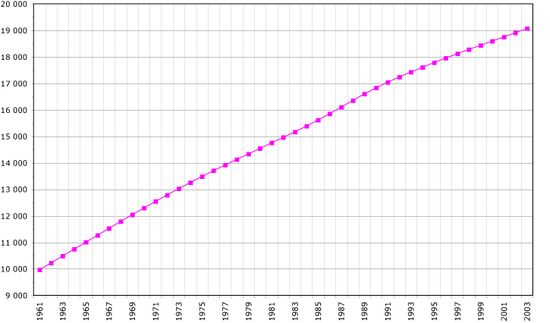 Demographics of Sri Lanka, Data of FAO, year 2005 ; Number of inhabitants in thousands.
Population: 19,238,575
note: Since the outbreak of hostilities between the government and armed Tamil separatists in the mid- 1980s, several hundred thousand Tamil civilians have fled the island. As of mid- 1999, approximately 66,000 were housed in 133 refugee camps in south India, another 40,000 lived outside the Indian camps, and more than 200,000 Tamils have sought refuge in the West (July 2000 est.)Age structure:
0-14 years: 26% (male 2,605,251; female 2,490,416)
15-64 years: 67% (male 6,285,118; female 6,606,196)
65 years and over: 7% (male 602,470; female 649,124) (2000 est.)Population growth rate: 0.89% (2000 est.) Birth rate: 16.78 births/1,000 population (2000 est.) Death rate: 6.43 deaths/1,000 population (2000 est.)Net migration rate: -1.47 migrant(s)/1,000 population (2000 est.)Sex ratio:
at birth: 1.05 male(s)/female
under 15 years: 1.05 male(s)/female
15-64 years: 0.95 male(s)/female
65 years and over: 0.93 male(s)/female
total population: 0.97 male(s)/female (2000 est.) Infant mortality rate: 16.51 deaths/1,000 live births (2000 est.) Life expectancy at birth:
total population: 71.83 years
male: 69.33 years
female: 74.45 years (2000 est.)Total fertility rate: 1.98 children born/woman (2000 est.) Nationality:
noun: Sri Lankan(s)
adjective: Sri LankanEthnic group: Sinhalese 74%, Tamil 18%, Moor 7%, Burgher, Malay, and Veddah 1% Religions: Buddhism 69%, Hinduism 15%, Christianity 8%, Islam 7% (1999)Languages: Sinhala ( official and national language) 74%, Tamil (national language) 18%
note: English is commonly used in government and is spoken competently by about 10% of the population Literacy:
definition: age 15 and over can read and write
total population: 90.2%
male: 93.4%
female: 87.2% (1995 est.)
- See also : Sri Lanka
|
Change Text Size:
[A]
[default]
[A] |



 |
|
|
|
|

