 |
|
|
|
Thu, 01 Oct, 2026
|

|

|
|
? Tamarind |
|
| Scientific classification |
| Kingdom: |
Plantae
|
| Division: |
Magnoliophyta
|
| Class: |
Liliopsida
|
| Order: |
Fabales
|
| Family: |
Fabaceae
|
| Subfamily: |
Caesalpinioideae
|
| Tribe: |
Detarieae
|
| Genus: |
Tamarindus
|
| Species: |
T. indica
|
|
|
|
|
|
|
|
Tamarindus indica
L. |
|
|
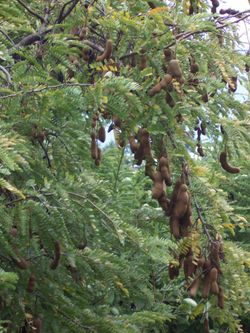
The Tamarind (alternative name Indian date, translation of Arabic تمر هندي tamr hindī) is a tropical tree, originally from east Africa but now introduced into most of tropical Asia as well as Latin America. The fruit is edible and popular.
 Jump to Page Contents Jump to Page Contents
|
|

Pay as you go
No monthly charges. Access for the price of a phone call
Go>
Unmetered
Flat rate dialup access from only £4.99 a month Go>
Broadband
Surf faster from just £13.99 a month Go> |
Save Even More
Combine your phone and internet, and save on your phone calls
More Info> |
This weeks hot offer
 24: Series 5
In association with Amazon.co.uk £26.97 |
|
Contents
Description
Uses
Description - Contents
Tamarindus indica is the only species of the genus Tamarindus in the family Fabaceae. The tree can grow up to 20 meters in height, and stays evergreen in regions without a dry season. Tamarind timber consists of hard, dark red heartwood and softer, yellowish sapwood. The leaves consist of 10 to 40 leaflets. The flowers are produced in racemes. The tree produces brown pod-like fruits, which contain pulp and many hard-coated seeds. The seeds can be scarified to enhance germination.In Malaysia it is called asam in Malay and swee boey in Hokkien. In India its called imlee. In Sinhala the name is siyambala, in Telugu it is called Chintachettu (tree) and Chintapandu (fruit extract) and in Tamil and Malayalam it is puli. The tamarind is the provincial tree of the Phetchabun province of Thailand.
Uses - Contents
The pulp of the fruit is used as a spice both in Asian as well as in Latin American cuisine, and is also an important ingredient to Worcestershire sauce and HP sauce. The pulp of a young fruit is very sour, and hence suitable for main dishes, whereas a ripened fruit is sweeter and can be used in desserts, drinks, or as a snack.
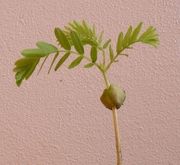 A tamarind seedling
Due to its denseness and durability, tamarind heartwood can be used in making furniture and wood flooring. The wood is a beautiful red timber. Tamarind trees are very common in South India particularly in Andhra Pradesh. They are used to provide shade on the country roads and highways like oak trees. Monkeys love the ripened tamarind fruit.The pulp, leaves, and the bark also have medical applications. For example, in the Philippines, the leaves have been traditionally used in herbal tea for reducing malaria fever. It is a staple in the South Indian diet, where it is used to prepare Sambhar (spicy lentil soup with lots of vegetables), Pulihora rice, and various types of chutneys. Tamarind is available in Indian stores worldwide. It is also sold as a candy in Mexico (see for example, pulparindo), and in various snack forms in Southeast Asia (dried and salted, dried and candied, as a cold drink, popsicle). Tamarind, due to its medicinal value, is used as an Ayurvedic Medicine for gastric and/or digestion problems.
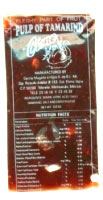 Pulp Of Tamarind
Tamarind is a popular food in Mexico and is used in many Mexican candies. |
Change Text Size:
[A]
[default]
[A] |



 |
|
|
|
|

